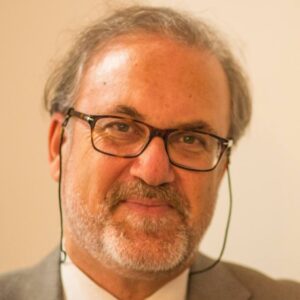
What connects art, nature, human consciousness, and artificial intelligence? In this essay, Mario Nottas explores art as a universal language, drawing on ancient Greek philosophy and contemporary science to reflect on the origins of creativity and our capacity to perceive and create beauty.
Appreciating art is second only to prayer—or, at the very least, meditation. Some distinguish humans from other forms of life by their awareness of death. However, there is a far more meaningful way to categorize life: by its capacity for artistic expression and appreciation—and this capacity is not limited to humans.
To support this conception, one must regard art as symmetry and recall an ancient Greek idea: “God is the Ultimate Geometrist.” In other words, the universal mathematics that governs analogies also points to what we perceive as beautiful, faultless, and cosmic—and is strictly bound by the rules of what we know as science.
Music offers a measurable example. How do we define music and distinguish it from cacophony? “Intuitively,” one might argue—and in doing so, one is most probably referring to an innate, “built-in” mechanism in humans that enables us to recognize harmony. But then, what is harmony?
Well, the answer to this question is easier to formulate: harmony stems from the intervals between precise vibrations (measured, for example, in cycles per second), which can be combined in ways that resemble military discipline. (If you are interested in atonal or Indian music, the above statement applies on a micro-scale.)
A musical piece, like a wonderful painting, an emotionally powerful film, a thought-provoking lecture, or any artful activity that leaves a profound and lasting imprint (as a result of engaging with thymos—see below), follows strict patterns and analogies that can be readily described by calculus. It is nothing other than the result of a meticulously assembled anthology of harmonies, which are known to “strike a chord” in the immaterial dimension of a human being (or perhaps even beyond the human realm—see, for example, plants’ reactions to music, cats’ preferences for fabrics that “match” their fur color, and much more).
Then why are some people more inclined to appreciate or create art than others? How do we first perceive art as children, and how are we connected to one another through this intangible code of communication that resonates in an area still largely unexplored by neuroscience? And what about AI, which is already capable of producing art?

The questions raised above are being investigated at major research institutions as we speak. There are no ready-made answers. However, both old and new lines of thought lead us to the same perspective: Deus is an Artist (a synonym for Geometrist).
Look around: everything we call “Nature” is, first and foremost, a work of art. Colors, light, texture, and motion form an aesthetic poetry that requires immeasurable skill to create. The fact that Nature is also home to humanity is secondary. Its primary purpose is artistic: it is there to delight and inspire.
In the biblical account of Creation, when God created the cosmos, He “saw that it was good.” This ethical principle is straightforward: it refers to the magical moment when an exhausted artist looks at the arte-fact (note the etymology) and replenishes body and soul with the joy needed to continue creating.
To begin answering some of the questions raised above, consider this: unless young humans are given the opportunity and guidance to appreciate their natural environment—which is, after all, the most readily available and arguably the highest form of art—they may struggle to recognize it in the work of others or to express themselves through art.
Furthermore, art is the ultimate tool of communication. It has no (obvious) dictionary, and its conventions may seem loose. In reality, the opposite is true: art is the most refined, demanding, and precise medium of communication. For it to fulfill its purpose, it requires the most refined and sensitive receivers.
What, then, about thymos, as understood in Hellenic pragmateia? Thymos and its manipulation—which have become something of a holy grail of modern psychotherapy and even neuroscience—must first be understood as the primary receptacle of the Code described above. We may think of it as the generative epicenter of human behavior and the locus of pathos, which, with remarkable Greek precision, brings together powerful emotions, irresistible drives, and their manifestations, ranging from courage and aggression to the profound joys of reproduction.
For the purposes of this note, we regard it as the play area for art, where one gets gifted with the necessary instruments to enjoy, understand, participate and finally create Art. It is where the Artist speaks with God (Deus). For the simple reason that they speak the same language.