The Brooklyn Museum presents more than 50 works from the Henry and Rose Pearlman Collection in an exhibition spanning Impressionism, Post-Impressionism, and early modern art. Paintings, sculptures, and works on paper by Chaïm Soutine, Paul Cézanne, Amedeo Modigliani, Edgar Degas, and their contemporaries trace the personal journey of two collectors whose holdings are now being gifted to three American museums.
In 2025, the Henry and Rose Pearlman Foundation announced the distribution of its collection among three U.S. museums: 31 works went to the Brooklyn Museum, 25 to MoMA, and six to the Los Angeles County Museum of Art (LACMA). The three institutions will share the works through future exhibitions and loans, while the Brooklyn Museum’s exhibition, on view through April 18, 2027, is the last opportunity to see the collection together in its entirety.
Henry Pearlman was born in New York in 1895 and built his fortune in the insulation business, founding the Eastern Cold Storage Insulation Corporation in 1919. His engagement with modern art began in 1945, when he purchased a painting by Chaïm Soutine at auction. Pearlman later recalled being captivated by a colorful painting by Soutine that he spotted in an auction-house window. In 1945, he acquired View of Céret (c. 1921–22), the first work in what would become a remarkable collection and the beginning of a lifelong passion for modern art.

Chaim Soutine. View of Céret, ca. 1921–22. Brooklyn Museum, Gift of the Henry and Rose Pearlman Foundation and Family
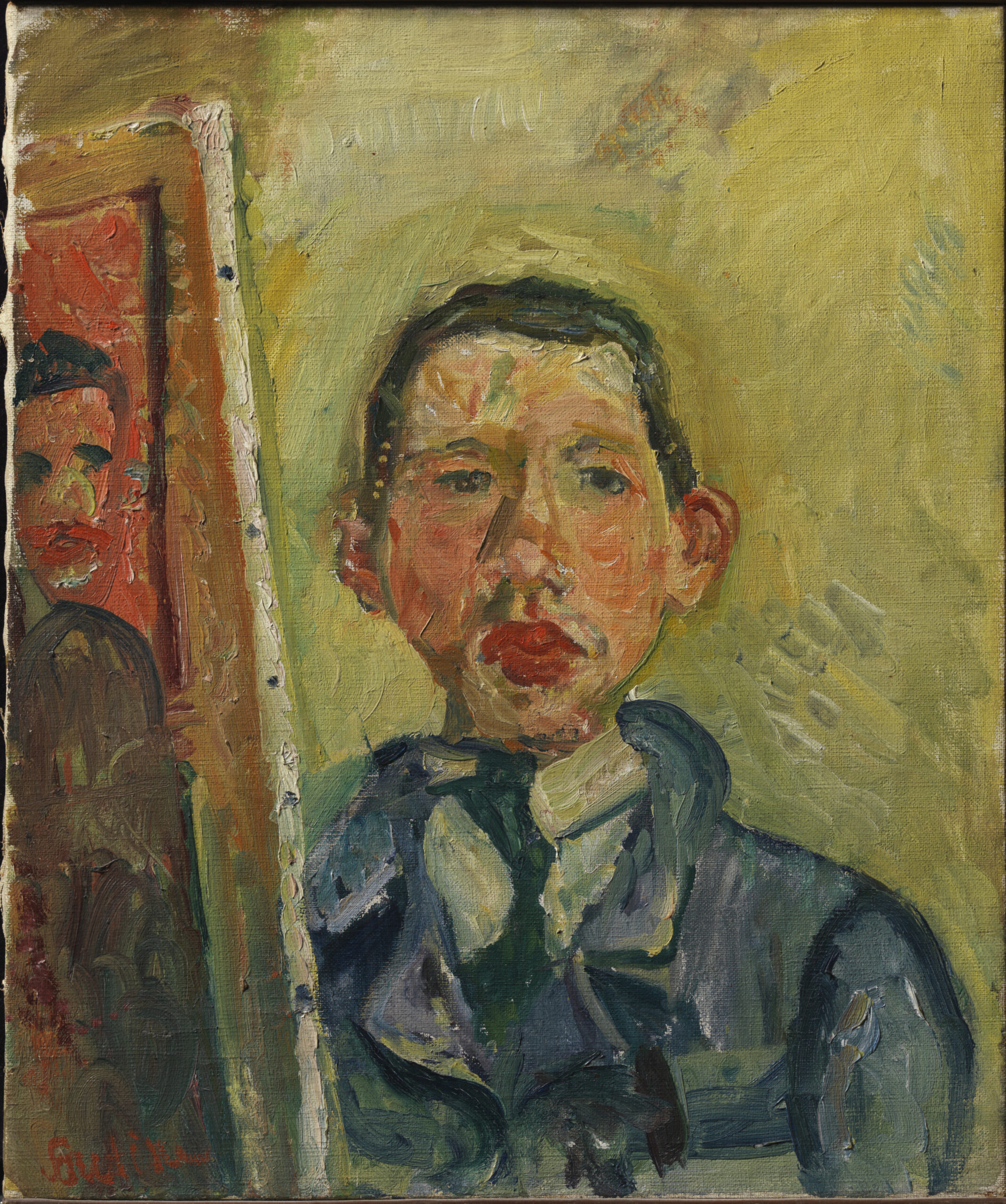
Soutine became one of the defining artists of the collection, with works such as View of Céret, Self-Portrait, Choir Boy, and Portrait of a Woman illustrating the range of his approach to landscape and portraiture. His vigorous brushwork and rich, often unsettling palette lend his landscapes and portraits a distinctive sense of movement and emotional tension, reflecting his singular place within the School of Paris.
Paul Cézanne is a key figure in the Pearlman collection, as an artist whose rethinking of form, space, and pictorial structure established his pivotal place in the history of modern painting. The exhibition includes several works by Cézanne, among them the lithograph Portrait de Cézanne, the oil painting Cistern in the Park of Château Noir, and Mont Sainte-Victoire in both oil and watercolor.
The selection of works by Edgar Degas, Édouard Manet, Vincent van Gogh, and other artists reflects Pearlman’s interest in the changing language of European painting from Impressionism to Post-Impressionism.
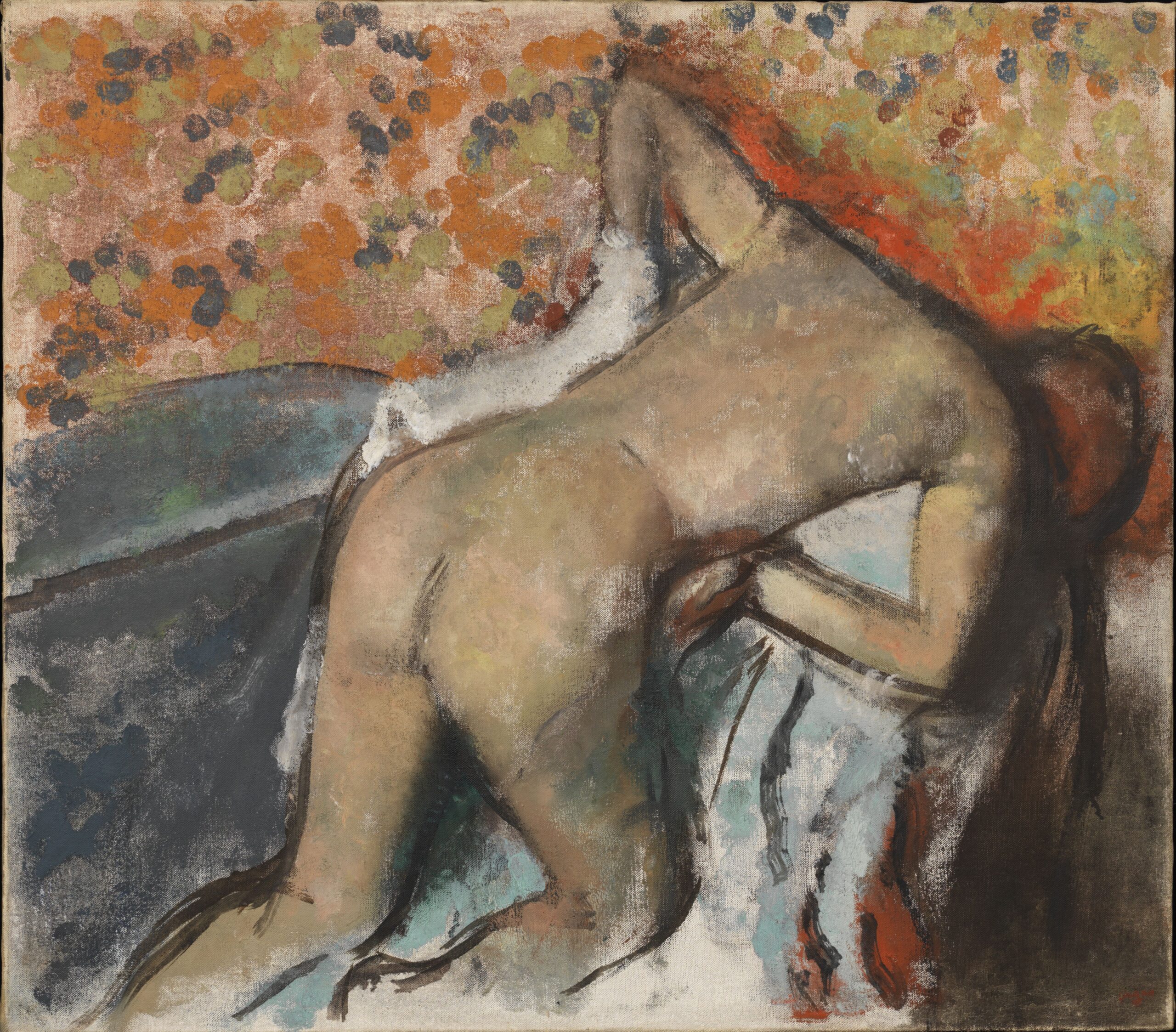
Degas’s Woman Drying Her Hair and After the Bath and Woman Drying Herself capture intimate moments of daily life, treating the body not as an idealized form but as a subject to be studied through movement and composition. In Young Woman in a Round Hat, Manet’s direct handling of paint reflects his break with academic conventions and his interest in modern life. Van Gogh’s Tarascon Stagecoach, by contrast, conveys the energy of the scene through expressive brushwork and a heightened palette.

Paul Cézanne. Cistern in the Park of Château Noir, ca. 1900. Promised gift from the Henry and Rose Pearlman Foundation to the Museum of Modern Art.
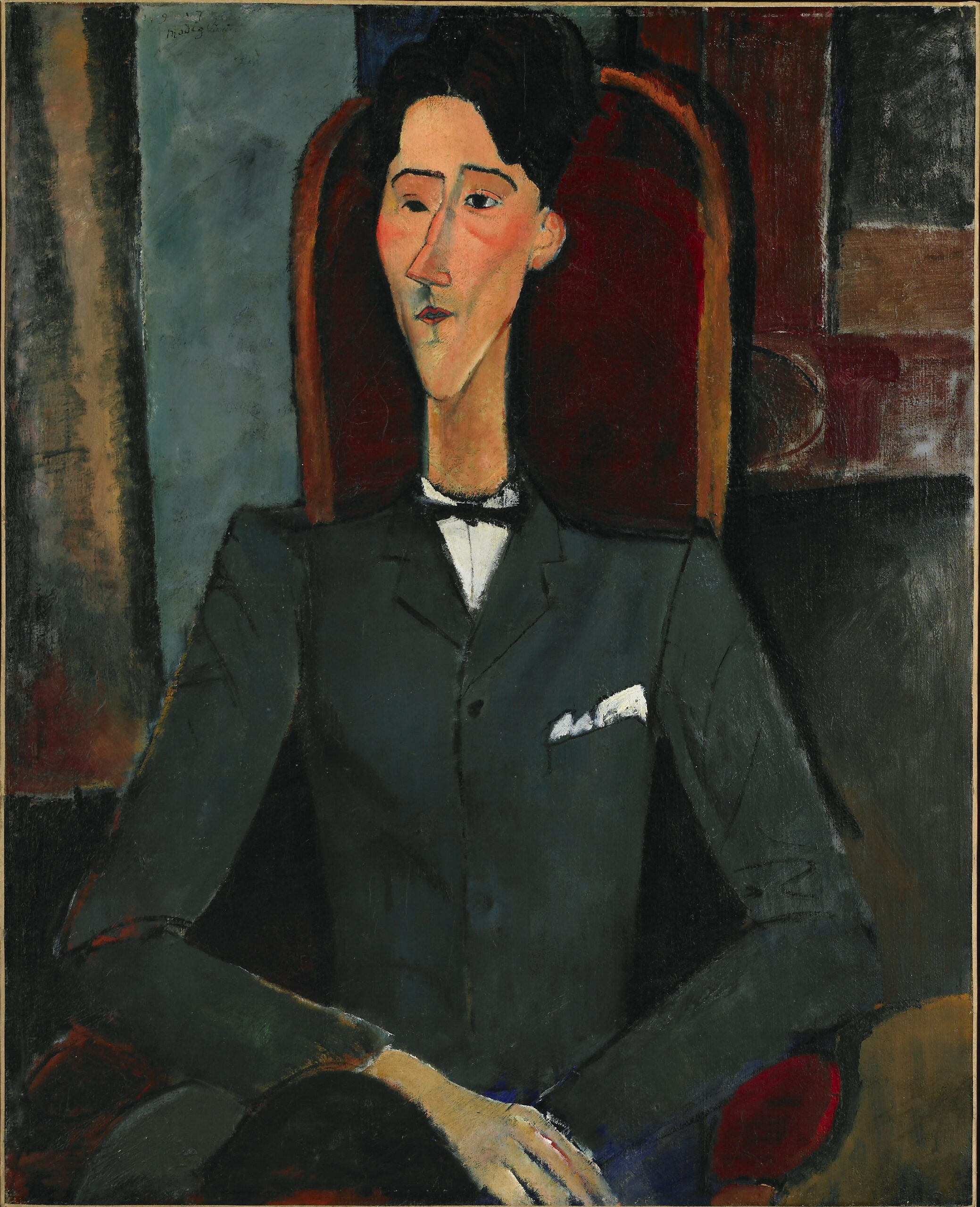
A highlight of the collection is Modigliani’s 1916 oil portrait Jean Cocteau, which captures the writer through the artist’s characteristic use of simplified forms and elongated features.
Largely self-taught, Pearlman built his knowledge through museum visits, gallery-going, and conversations with art professionals. His collection reflects a personal sensibility, bringing together artists whose work captured his attention and continued to engage him over time.
Art was also part of his everyday life. Pearlman displayed works in his home and office, living alongside the paintings and sculptures he had acquired. The exhibition includes two portraits of Henry Pearlman: Oskar Kokoschka’s Henry Pearlman, an oil painting dated 1948, and Jacques Lipchitz’s Henry Pearlman, a bronze sculpture from 1952.
Seen as a whole, the Pearlman Collection is a reminder that the history of art is shaped not only by artists and movements, but also by the individuals whose personal vision leads them to recognize and preserve their work.