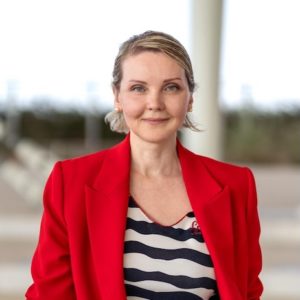
Robert Vargas is one of Los Angeles’ most recognisable contemporary muralists, an artist whose monumental portraits have become part of the city’s visual identity. Born and raised in Boyle Heights, he has built a practice deeply connected to the communities of Los Angeles, bringing people who are often absent from traditional monuments into public space and working directly with the histories and identities of the neighbourhoods in which he paints.
That relationship with the city has taken tangible forms. Los Angeles named an intersection in Boyle Heights Robert Vargas Square and proclaimed September 8 as Robert Vargas Day. In 2026, Los Angeles County went further, designating January 24 as Robert Vargas Day countywide in recognition of his contribution to public art.
Yet Vargas’ practice has long extended beyond Los Angeles. His murals, portraits and live painting projects have taken him across the United States and internationally, from Europe to Asia and Australia. Whether working in Los Angeles, Athens, Paris, Tokyo or elsewhere, he approaches the city as a community to be encountered. His works are frequently developed through conversations and direct contact with the people whose cultural histories become part of the image.
In July 2026, while creating the monumental mural Vola oltre l’orizzonte in Thiene, Italy, Vargas interrupted the work to travel to Berlin for a single night. There, at my invitation as a curator, he joined the opening of Eden.exe at 48 Stunden Neukölln, one of Berlin’s major contemporary art festivals, as the project’s featured artist. During a live performance, he created a portrait in front of the audience before returning to Italy to complete the mural.
It is tempting to describe this simply as an international career. But Vargas himself offers a more precise term: artistic diplomacy. His movement between cities is accompanied by an unusual commitment to entering their cultural environments, meeting their communities, and translating those encounters into images. In this sense, Vargas is an artist who carries the identity of Los Angeles into the world while allowing each new place to transform what he brings back.
You grew up in Boyle Heights, a neighbourhood shaped by Mexican American, Japanese, Jewish, Black, Eastern European and immigrant histories. Do you think growing up among different cultures taught you to see identity as something we build in relation to one another?
Absolutely. My surroundings informed both my curiosity about other cultures and my ability to coexist with them. When I was growing up, there was a strong Russian and Polish presence, as well as Japanese and Mexican American communities. That overlap of cultures became a shared experience for all of us. My own family has been there for five or six generations, so I did not necessarily feel like an immigrant myself, but I was sympathetic to the immigrant experience. It became a source of inspiration for my paintings and also for the way I move through the world. It made me want to travel, learn about other places, and paint the experiences of different people.
Your work is unmistakably rooted in Los Angeles, yet it speaks to people far beyond the city. What is it about Los Angeles that you believe can be translated universally?
Los Angeles, like many great metropolises, is a microcosm of the world. It is one of those destination cities where people are constantly coming and going. Growing up in that environment sparked my desire to learn more and to travel. Surrounded by so much diversity, I wanted to see where these cultures came from and experience them directly. There is a calling for me to go out into the world, meet people, and paint their experiences. In that sense, Los Angeles becomes a starting point for something much larger.
Public art does something that museum art often cannot: people encounter it without making a deliberate decision to enter a cultural institution. Does this give the artist a different kind of social responsibility?
I believe artists have a special responsibility when they create public work because they are addressing a much larger audience. You are not speaking only to the art aficionados who visit galleries and museums. You may also be speaking to people who do not feel represented within those traditional spaces. Through public art, an artist can transcend certain boundaries and even help create the history of a city. I exhibit in galleries and museums as well, but there is a different responsibility when you create something that everyone will see. All my public work is site-specific. Wherever I am in the world, I try to mirror the community around me. The work should reflect the place and the people who live there.
You often paint faces at a monumental scale: cultural figures and athletes, but also people who might otherwise remain invisible. What changes when a human face becomes larger than the architecture surrounding it?
I am very deliberate about whom I paint and what kind of message I put into the world. People’s faces contain stories. I may share the story of a particular person, but I can also use that face to speak about something much larger: who we are as human beings and who we are collectively. The portraits can be arranged as a series and work together around one central message, or they can stand alone and speak about different experiences. I am not necessarily choosing people because of their public status. I often choose everyday people. When I paint them on buildings, they become monuments. They begin to represent a larger community, even if nobody had previously seen them in that way.
There is a paradox in your work: the murals are enormous, but their emotional center is often very intimate, such as a face or a gesture...
That is a very keen observation. Although the murals are large, there is definitely an intimacy in how I create and reveal them. Intention is always at the center of what I do. The way people receive the artwork is connected to the way I personally engage with the environment around it. Many people paint murals, but what makes one mural different from another is not only the image or the message. It is also the way the artist engages with the surrounding community. That relationship makes the artwork personal to the people who live there. I have spent my whole life cultivating that person-to-person exchange. My message is quite simple: there is only one race, and that is the human race. Our coexistence should be based on understanding and respect.
When I arrive somewhere, I never come with a finished image already in mind. I want to experience the place first. I spend time there, eat the food, and speak with people. Gradually, it becomes clear what I am supposed to create, whom I should paint, and what I am trying to say. Without that real human foundation, the connection would not exist, and the absence of that connection would be visible in the art.
With your The Portraits of the World, you participated in a project I curated. Looking back at that experience, what does the idea of a “portrait of the world” mean to you today?
A portrait can reflect a place, a culture, a personal history. There is also a great deal of me in the work, alongside the person I am painting. Sometimes the portrait becomes partly autobiographical. I love continuing the Portraits of the World series wherever I go. Even when I travel to paint a much larger mural, I try to find time to go into a city centre or another public space and create a portrait. The act of making the portrait becomes an activation. It brings people together and creates a temporary community around the work. People who might otherwise have walked past one another suddenly gather to watch the portrait appear. They become invested in the process because they were there from the beginning.
I work rather quickly, so the connection becomes very immediate and tangible. Depending on how the portraits are arranged, the series can produce an endless number of meanings: it can speak about powerful women, particular places, geographical experiences, or many other subjects. I also think this live, handmade process has become increasingly important in the age of artificial intelligence. We need to remember human connection and the experience of seeing something created by hand in real time, not simply generated or passed through a filter. Perhaps it is the Vargas filter, but it is happening there, in front of you. That experience has become rare, and now more than ever it is important to share it.
When you paint a portrait, what kind of dialogue do you seek with the person you’re painting?
I often describe my black-and-white portraits as poems. They are interpretations of a particular moment in time. My murals, which are much more labour-intensive, are more like novels. They require a different approach. In the black-and-white Portraits of the World, the person’s face becomes a vehicle. It is not simply a traditional portrait in which the only objective is for someone to say, “Yes, that looks exactly like me.” It is an experience.
There is expression and sometimes abstraction, although the person remains recognisable. Human beings are layered, and the portrait also contains many layers. That is where the silent dialogue happens. It is a process of bringing something from deep inside the person to the surface—sometimes something even the sitter does not realise they are revealing. They become completely engaged with me in that moment. Whether there are one hundred or several thousand people around us, everyone else disappears. It becomes just the two of us. It is a powerful, almost meditative exchange.
You have called your practice a form of artistic diplomacy. What can art say about migration and belonging that politics cannot?
I think of my art as artistic diplomacy because, although I am based in Los Angeles and I am American, I am also Indigenous, and I see myself as a citizen of the world. I love travelling and creating work that belongs to the particular places where it is made. I paint people within the surroundings they call home. An artist can become a bridge between cultures and move through different communities in a way that would be more difficult for a politician. My intention is not diluted by a political agenda.
In Angelus, the central figure is a Tongva child. The history of Los Angeles therefore begins not with Hollywood or modern America, but with the Indigenous people of the land. Was placing that child at the centre also a way of asking who has the right to tell the story of a place?
The child is the central figure because the mural is located in downtown Los Angeles. She honours the original people of this particular area, people for whom there is no major monument in the city. Now there is this enormous image of a Native American child. She represents both our past and our future. The message she carries is hope.
The title Angelus (Angel us) also speaks about unity. We are all united. Los Angeles is a melting pot of the world, and this mural is my continuing dialogue with the city. I have been working on the wall for a long time. During that period, I have traveled throughout the world. Every time I return to the mural after a journey, the work is infused with those experiences. It is being shaped by this particular moment in my life, by my beliefs and by what I have encountered in other places. Some elements have changed because I have changed. I am also trying to bring certain things to light because of what I have witnessed elsewhere.
Your murals connected with Japanese baseball culture have been described as cultural bridges between Los Angeles and Japan. Can an image genuinely change the relationship between two cultures?
I think it can. Again, it connects to the neighbourhood where I grew up. Boyle Heights had both a Japanese American and a Mexican American presence. Those two cultures have been intertwined for a long time, going back to before the war. Little Tokyo is also very close to Boyle Heights. It was a place everybody visited, so the neighbourhoods became extensions of one another.
When this extraordinary Japanese baseball player, widely considered one of the greatest in the world, came to play in Los Angeles, I saw an opportunity to bring attention to the Japanese American and broader AAPI community (Asian American and Pacific Islander), particularly in an area that had struggled after the pandemic. I wanted to create an image that would inspire cultural pride, as well as pride in the city. He was going to wear the jersey of a Los Angeles team, so the whole city could stand behind him.
The mural is also connected visually with a portrait of a Mexican-born baseball player on another side of Boyle Heights. The two figures face one another. For me, this says more about what these cultures share than about what separates them. Both players achieved remarkable things on the field and represented their heritage beyond it. Although they played for the same team at different times, both brought their communities to Dodger Stadium. Today those cultures have transformed the experience of the stadium itself, even the food people eat there. It is no longer simply hot dogs and Coca-Cola. You might have sushi and tacos during the same game. That is a very Los Angeles story.
Through these projects, I have also developed a relationship with Japan. I travel there regularly and create work there, bringing attention from Los Angeles to Japan and from Japan back to Los Angeles. In that sense, I have become an ambassador for a Japanese American, Mexican American, and distinctly Angeleno culture. There was initially some opposition to the mural. People asked why I was painting a foreign-born player who did not speak English, rather than choosing someone else. But that was never the point. The mural helped usher in a different way of seeing foreign-born players and immigrants. When someone towers over the city in an image of that scale, it changes the way they are perceived.
When you enter another culture as an artistic diplomat, what do you feel you are representing: Los Angeles, your own history, the United States, or something more universal?
I represent all of those things. I represent my family name and my cultural background. To a certain extent, I also represent this country. I hope that when people meet me abroad, they understand that America cannot be reduced to what they may see on the political stage. Most importantly, I am simply a human being who wants to connect with other people. When I paint a mural or create one of the Portraits of the World in a public space, people gather around. They become excited, they want to meet me, take photographs, and participate in the experience. There may be cultural differences, and we may all speak different languages, but in that moment it does not matter. People connect through the creative experience and through the human experience. There is always a desire to communicate, even when we do not share the same spoken language. The human language is the same. It is like love: love is love.
What are you working on now?
My immediate plan is to complete a fourteen-storey mural. After that, I will return to Angelus, which is intended to become a Guinness World Record mural and the largest mural in the world created by a single artist. I have been working on Angelus for several years, and I am very excited to see it finally cross the finish line. I am also designing a pair of Vans shoes and developing several other projects. In January, I will present an artistic retrospective at the LA Art Show. I am looking forward not only to creating and experiencing all these projects, but also to stepping back and understanding what they mean and how these experiences can shape the work that comes next