
Symbolism in Orthodox Icons: The Language of the Images of Saints
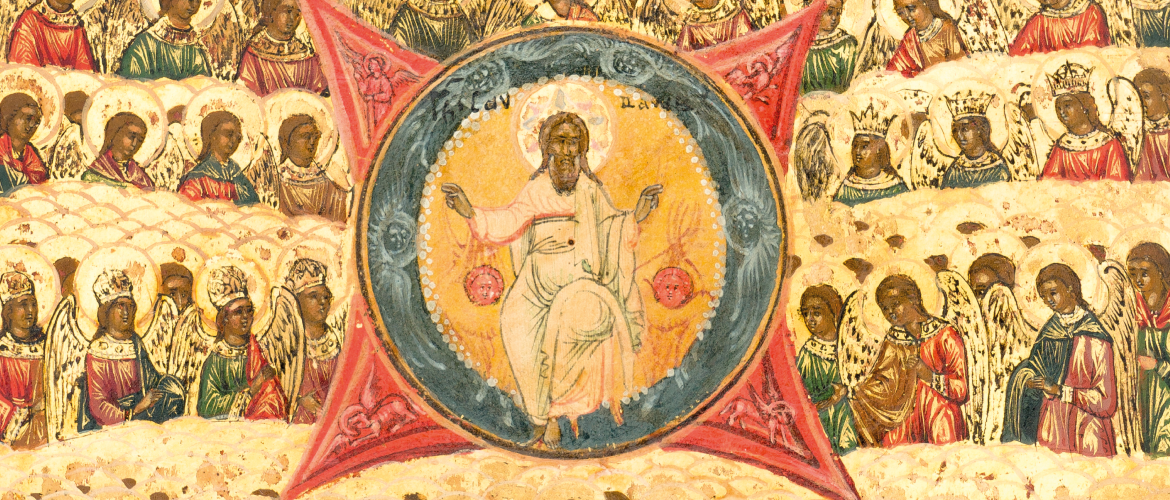
The hagiographic icon (zhitiyna ikona) format occupies a special position in Orthodox religious art. These icons are internationally recognized for their intellectual complexity and unique compositional division. This article explores the symbolism in Orthodox icons through the example of hagiographic icons, showing how their dual structure and compositional elements create a holistic theological statement.
The Intellectually Complex Format of Orthodox Sacred Art
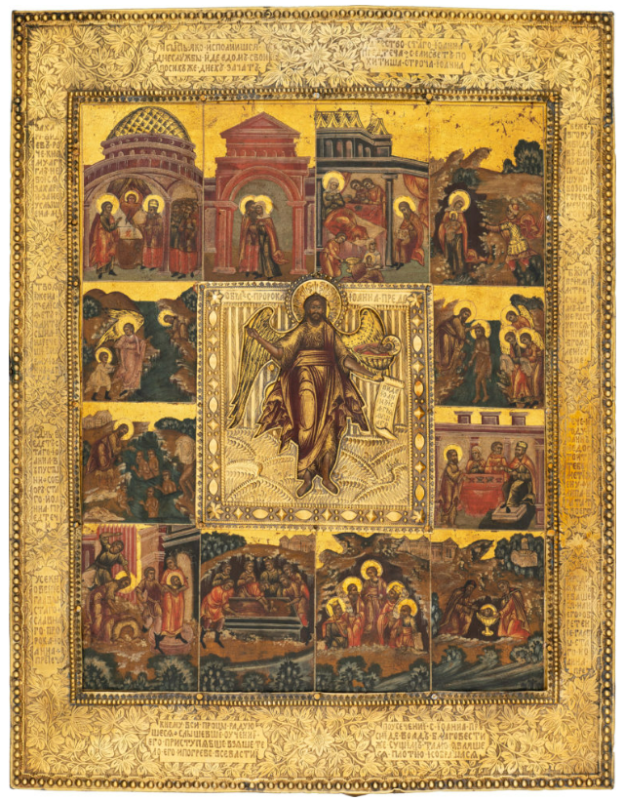
The defining feature of hagiographic icons is their dual structure, expressing a central idea of Christian theology—the unity of the divine and the earthly. The centerpiece usually depicts Jesus Christ or the saint in a timeless, glorified state, surrounded by smaller narrative scenes (kleima) that depict key moments from their life.
In this way, the central image represents eternal sanctity, while the surrounding scenes trace the earthly path that led to it. The power of this format lies in its ability to anchor eternity within lived human experience.
The Centerpiece of Hagiographic Icons
The central figure is never depicted in a purely realistic manner. Every detail—from posture to garments—is intentional and symbolic. Liturgical vestments indicate the saint’s rank and spiritual role, with colors carrying specific meanings: red signifies martyrdom, while green symbolizes life and renewal.
Gestures are equally significant. The traditional two-finger blessing of the right hand reflects the dual nature of Christ—both human and divine—while the arrangement of the remaining fingers often forms the Greek Christogram “IC XC.”
Additional elements may deepen the symbolism. Wings, when present, suggest a prophetic or angelic dimension, as seen in depictions such as John the Baptist – the Angel of the Desert.
Symbolism in Orthodox Icons: Narrative of the Border Scenes
The border scenes are responsible for the narrative symbolism in Orthodox icons. They represent the saint’s theological biography. Their sequence is deliberate, typically beginning with the saint’s origins and concluding with martyrdom or dormition. Some icons extend the story further, depicting posthumous miracles that affirm the saint’s enduring spiritual presence.
Recurring motifs enrich these narratives. Miraculous inversions of nature—such as the horse speaking with a human voice in the life cycle of St. Charalambos of Magnesia—highlight the transcendence of natural laws. Another common theme is conversion through witness, where observers embrace faith after witnessing the saint’s endurance or miracles.
Together, these narrative and symbolic elements transform hagiographic icons into profound visual testimonies of sacred lives. For those interested in exploring this tradition further, the recently published art catalog of the Oleg Kushnirskiy collection is a great starting point for a serious inquiry.