
Why Russian Icons Are Gaining Global Attention in Art Institutions
For many centuries, Russian icons have been viewed primarily as objects of religious veneration. Today, they have developed a fascinating dual identity — both as sacred objects of Orthodox worship and as highly valued works of fine art. They continue to attract growing interest from museums, galleries, and private collectors around the world.
Russian Icons: Spiritual Objects in the Art Market
Unlike Western religious paintings, Orthodox icons were never intended to showcase individual artistic expression. Instead, they have always followed strict canonical traditions, with the primary purpose of preserving and transmitting sacred imagery in an unchanged form.
However, this combination of theological significance and formal beauty — including gold grounds, egg tempera techniques, and gesso relief details — is what gives icons their unique appeal among today’s collectors. Collecting trends are also evolving. While 20th-century collectors focused primarily on medieval panels, modern collectors increasingly appreciate rarer works from the 18th and 19th centuries, including Old Believer icons that were once considered less valuable examples of religious art.
Where the Greatest Collections Live
Russia itself is home to several significant icon collections, including those at the State Hermitage Museum and the State Russian Museum. Among privately established collections is Moscow’s Museum of Russian Icon, founded by Mikhail Abramov in 2006, which holds more than 4,500 icons. The private Nevyansk Icon Museum preserves one of the most notable Old Believer icon collections in the Urals.
Outside Russia, one of the largest collections of Russian icons can be found at the Icon Museum and Study Center in Clinton, MA, founded by Gordon Lankton.
Oleg Kushnirskiy: The American Collecting Story
One of the notable Russian icon collecting stories in the United States is that of Oleg Kushnirskiy, an art photographer and antique expert who arrived in the country in the early 1990s. Oleg developed an interest in Old Believer icons during his life in the USSR and later continued building his collection in the United States.
The collection of more than 60 icons was formed through careful acquisitions and has gained increasing recognition in recent years.
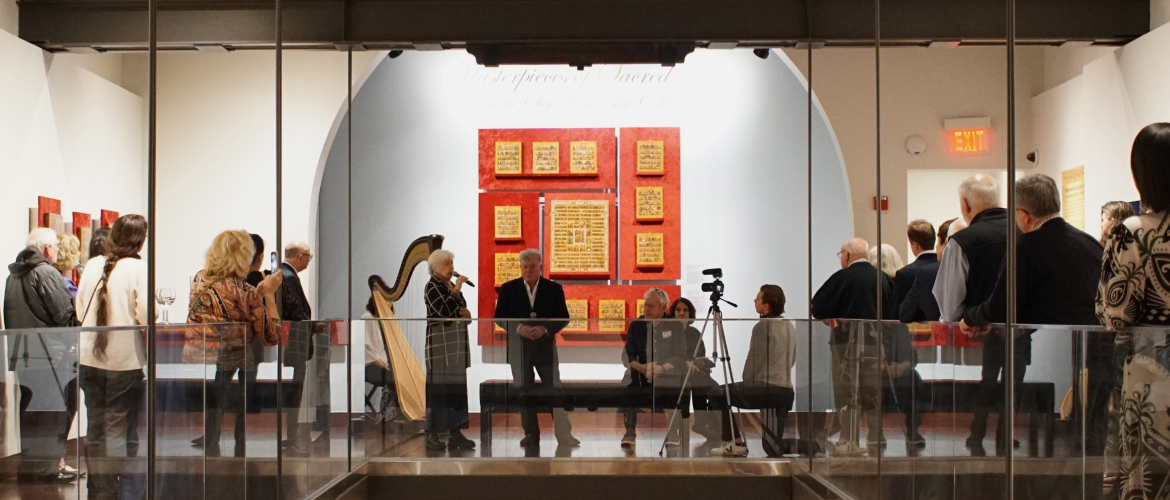
In late 2024, the Museum of Russian Art in Minneapolis, MN, presented sixty works from a major private American collection in an exhibition titled “Masterpieces of Religious Art.” In 2025, publisher Merrell Publishers released a fully illustrated catalog documenting three centuries of this collection, bringing further scholarly and public attention to these works.
Most recently, in February 2026, the Icon Museum and Study Center in Clinton, MA, opened the exhibition “Icons: Old Believers and Their World,” co-curated with a Yale University medieval art specialist. The exhibition is planned to travel to the Georgia Museum of Art and several European icon museums in the future.