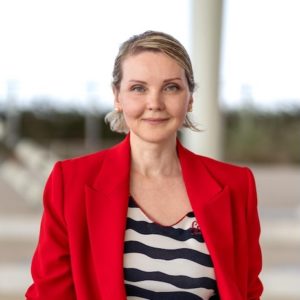
In this conversation with 300Magazine, cultural entrepreneur and founder of About Art, a platform exploring the role of art in everyday life, Heidi Zuckerman explores how art changes the way we see the world, why curiosity is essential to experiencing it, and what it takes to make art accessible to everyone.
Over more than three decades as a curator and museum director, Heidi Zuckerman has curated more than 200 exhibitions and led the realization of two new museum buildings: the Aspen Art Museum, designed by Shigeru Ban, and the Orange County Museum of Art, designed by Morphosis under the direction of Thom Mayne.
Alongside her institutional work, Zuckerman has consistently explored ways to bring audiences closer to artists and their ideas. Her Conversations with Artists book series, now spanning five volumes, features in-depth dialogues with contemporary artists, offering insights into their creative processes, perspectives, and lives.
Today, her focus is About Art, which brings together a podcast featuring more than 200 conversations with artists, books, personal essays, and travel. At its heart is the belief that access to art is a basic human right and that meaningful relationships with art can become part of everyday life. She is currently writing The Practice of Attention, a book exploring what artists can teach us about the ways we pay attention, perceive the world, and engage with art.
After more than thirty years as a curator and museum director, you decided to focus on About Art. How did you know it was time for that transition? What became important for you to create at this stage, and what freedom does having your own platform give you to pursue it?
I have spent my entire professional life connecting people with art and artists to make their lives better. For many years, museums were the primary way I did that. I love building things that don’t yet exist. I had the extraordinary opportunity to realize two new art museums, one with Shigeru Ban in Aspen and another with Thom Mayne in Orange County. Both were projects that had been imagined for years before I arrived.
Having built two museums, I wanted to consider how much more broadly I could make art accessible. I’ve been having conversations with artists since I arrived in New York in 1992. For years, people encouraged me to find a way to make those conversations available to people who weren’t physically present. I launched my podcast in 2019. About Art allows me to pursue the same purpose without being limited by geography, a building, or an exhibition schedule. Through the podcast, my writing, books, travel, and opportunities to look at art together, I’m interested in creating the preeminent way people anywhere in the world connect with and learn about art. I want to make the world fall in love with art.
You are currently working on a book titled The Practice of Attention. Why do you think of attention as a practice? Can you recall an artist or an encounter with a work of art that changed what you notice in everyday life?
Artists have taught me that we can get better at paying attention. For my first exhibition at the Jewish Museum in New York, The Hanukkah Project, I invited artists to create works in unexpected places, including locations outside the traditional exhibition galleries. Olafur Eliasson noticed an architectural grate in the museum building that I had walked past without really seeing. He became interested in it as a site for his project. I had been working in that building, and it took an artist coming into my environment to show me something that had been there all along. Once someone calls your attention to something, it’s very difficult to unsee it. I’m particularly interested in the distinction between looking and seeing, and how we can move from one to the other. Spending time with art is a wonderful way to practice that. And with awareness comes choice.
I love reading your newsletters and journal entries on About Art. In one of your newsletters, you write about how interest begins when something catches our attention, even when the artist is unfamiliar, and the meaning of the work is not yet clear. How do you maintain that openness in your podcast, especially when speaking with artists you have known for years? Can you recall an answer that changed the way you saw the person you were speaking with?
I’ve known some of the artists I interview for decades, and I’m always interested in what I don’t know about them. Hank Willis Thomas has been on About Art twice, and both times he’s turned the interview around on me. In our second conversation, he asked me if I thought I was privileged. I said yes. He then asked me, essentially, if I was privileged, why I wasn’t choosing joy in everything I did. What an extraordinary question! I hadn’t previously considered the relationship between privilege and the choice to experience joy in that way. I’ve been having conversations with artists for years. Part of what has sustained my interest in doing so is that I never know where a conversation is going to go. I’m as interested in having my own assumptions challenged as I am in learning more about the person I’m speaking with.
"There is something wonderful about the fact that an artist’s work can continue to keep people company long after the artist is gone."

Heidi Zuckerman
In your journal entry, Keeping Artists Alive, you mention that your relationship with an artist continues after their death. What feels especially important to convey about that person to people who will know them only through their work?
Having known an artist personally, I have memories of conversations, studio visits, and how that person saw and experienced the world. I’m interested in intention. Why did an artist make something? Why did they choose a particular material, scale, or color? What were they curious about? One of my reasons for publishing Conversations with Artists is to preserve the artists’ voices and make the experience of being in conversation with them available to other people. I also love the idea that artworks keep us company. We can live with them and continue to develop relationships with them over time. There is something wonderful about the fact that an artist’s work can continue to keep people company long after the artist is gone.
You speak about art’s ability to help us understand ourselves, experience joy, and feel connected to others. Is there room for discomfort in those relationships? Can you tell me about a work that became meaningful to you precisely because it unsettled you or challenged you in ways you initially resisted?
The first time I saw Mark Manders’ work at documenta, I really didn’t understand it. I became interested in why I didn’t understand it. I subsequently spent several years curating an exhibition of Mark’s work and writing a field guide so that I could give other people access to his very personal iconography. It was a great opportunity to learn how much I could expand my own capacity to see and understand, not only the work of one particular artist, but contemporary art in general. One of the five questions I’ve encouraged museum visitors to ask themselves when looking at art is simply, “Do I care?” And you’re allowed to say no. There is, however, a difference between not caring about something and not yet understanding it. My experience with Mark’s work taught me the value of leaning in when I encounter something I don’t understand.
You have consistently advocated for access to art as a basic human right. What experience from your work best explains why you see it as a right? What did it help you understand about the role art plays in people’s lives?
I can trace this conviction to an experience I had as a college student. I’d had an argument with my boyfriend and walked into an art gallery in Philadelphia. Spending time with art changed how I felt. My circumstances hadn’t changed, but I had a different experience of them. I’ve spent my professional life trying to make that possibility available to other people. When we opened the new Orange County Museum of Art (OCMA), we made admission free. More than a quarter of a million people visited in the first eleven months, more than twelve times the previous annual attendance. Consider how many people were choosing to spend time with art. Art can help us understand ourselves, experience joy, feel less alone, and develop a greater understanding of other people. I can’t imagine why we wouldn’t want everyone to have access to those experiences.
What has your experience taught you to notice about people visiting a museum for the first time?
I pay attention to how comfortable people are. Do they know where to go? Does someone greet them? Are they worried about doing something wrong? At OCMA, our guidance to the front-of-house team was very simple: smile and lean forward. People want to be seen. I also care enormously about things that might seem unrelated to art. Where can people sit? Can they easily find the bathrooms? Can they get something to eat or drink? All of those things contribute to how someone experiences a museum. The little things are the big things. I want people to know that they belong in a museum and that their opinions about what they see matter.
What change in the way the museum operated helped you move closer to that goal, and what signs told you that visitors were developing a sense of belonging?
We opened the new OCMA for twenty-four consecutive hours. I wanted people to have lots of different reasons to come to the museum and to encounter art in the process. Offering free admission was also fundamental to what I wanted to accomplish. And a museum can be free and still be intimidating. We worked very deliberately on how people were greeted, the kinds of programming we offered, and the ways in which people could use the building. The enormous increase in attendance suggested to me that there was an interest in art in our community that hadn’t previously been accommodated. I wanted people to think of OCMA as their museum and to consider coming to the museum as one of the things they regularly did in their lives.
Creating a new museum requires bringing people together around a future they cannot yet see. While working on the new buildings for the Aspen Art Museum and OCMA, was there a moment when your vision met significant resistance? How did you decide when to stand your ground and when to reconsider your approach?
When we were developing the program for the new Aspen Art Museum, we hadn’t included natural light in the exhibition galleries. Shigeru Ban questioned that decision, and we went to look at museums together. Experiencing artwork in galleries with natural light and galleries without it allowed me to reconsider our original program. Natural light subsequently became an important part of the building.
There was another moment when the board wanted Shigeru to present three architectural designs. He asked why he shouldn’t simply present the best one. I loved that question. One of the things I enjoy about working with artists and architects is being challenged to reconsider something that I’ve taken for granted. When you’re building a museum, you have to make thousands of decisions. I try to be clear about why I’m advocating for something. If I have new information or someone has a better idea, I’m very happy to reconsider. And when something is fundamental to the purpose of the institution, I’m willing to advocate very strongly for it.
Heidi Zuckerman
In another of your journal entries, What If Failure Isn’t Failure?, you suggest approaching failure with curiosity, as part of the creative process. That idea resonates deeply with me. Have you had an experience that initially felt like a failure but took on a different meaning over time?
When we were trying to build the new Aspen Art Museum, we ran a campaign in an election that would have allowed us to purchase public land on which to build the museum. We lost the election in what I experienced as a stunning defeat. The results were essentially the inverse of what the polls had predicted. We subsequently ended up with a much better site for the museum, right in the center of town. Rejection is often protection. I try to remember that I may not have enough information at the time something happens to understand whether or not it was in my best interest. Or as my husband says, “who knows what is good and what is bad.”
The interests of artists, audiences, staff, and those who fund a museum can diverge. Can you tell me about a difficult decision that required you to choose among those interests? What ultimately guided you?
In 2008, I had a sense that the economy was going to be significantly impacted, and I proactively reduced the Aspen Art Museum’s expenses by twenty percent. We ended the year exceeding our original revenue projections by fifteen percent. Reducing expenses when you haven’t yet experienced a decline in revenue is a difficult decision, particularly when you have ambitious plans for artists and exhibitions. I am fiscally conservative. When you run a nonprofit institution, you are existing based on the generosity of others; I believe that requires an even greater degree of transparency and discipline with anything related to finances. I take that responsibility very seriously. I want the people who invest in an institution I lead to know that I am as attentive to its financial well-being as I am to the quality of its exhibitions.
Early in your career, what did you consider the defining quality of a good museum, and how would you answer that question today?
Early in my career, I was very focused on artists and exhibitions. I wanted to identify artists whose work I thought was particularly meaningful and give them opportunities to realize projects and reach audiences. I still care enormously about that, and having directed museums for nearly twenty years, I have a much broader understanding of what makes a museum successful. I’m interested in what happens to people when they spend time with art. What do they discover about themselves? Do they become curious about something they hadn’t previously considered? Do they want to come back? I care as much about the quality of someone’s experience with art as I do about the quality of the art they’re experiencing.
What do museums need to change in their relationships with artists and local communities to remain meaningful to them? What would you change first if you were to lead a museum again today?
I believe museums should be ambitious about art and generous toward people. Some of the most interesting experiences I’ve had as a curator have come from asking artists what they would like to do and then helping them do it. I am also always interested in asking people in the community what they would like from their museum, including people who don’t currently visit. I’ve spent much of my career putting art in unexpected places. In Aspen, for example, we worked with the Aspen Skiing Company to put artists’ work on ski lift tickets. I loved knowing that people were spending their days skiing and wearing a work of art, whether or not they had any intention of going to the museum. I would continue to look for opportunities to bring art into people’s lives, rather than requiring them to come to a particular place to experience it.
"I have no interest in telling people what to think about art. I’m interested in giving them the confidence to articulate what they think and why."
How has the practice of attention you developed through years of working with art and artists shaped the way you lead and bring people together? How are you bringing that experience to About Art?
I see things before they exist. I’ve developed that capacity through more than thirty years of working with artists, and it’s been enormously valuable in my work building museums. I can imagine what something could become and then bring together the people, relationships, and resources to make it possible.
Listening is a huge part of that. I’m interested in what people care about, what they want to accomplish, and what we might be able to do together. I’m applying that same approach to About Art. Through the podcast, books, newsletter, Come Look at Art with Me, and our travel experiences, I’m creating different opportunities for people to develop relationships with art and with one another. I have no interest in telling people what to think about art. I’m interested in giving them the confidence to articulate what they think and why.
Gabriel Orozco’s Home Run, which you discuss in your About Art newsletter Community, features oranges placed on the windowsills of buildings opposite the Museum of Modern Art, turning a simple gesture into a collective act. How did that experience shape your understanding of community? What would you like to create through About Art that would allow people to take part in a shared experience?
I went to the Museum of Modern Art expecting to see what I understood to be a traditional exhibition. I remember finding the exhibition label for Gabriel Orozco’s Home Run and looking around for the artwork. I couldn’t find it. And then I literally lifted my head and saw it. It wasn’t inside the museum. It wasn’t even in the sculpture garden. It was across the street, in the windows of the buildings overlooking the museum.
Gabriel had invited people to place oranges on their windowsills. The people who lived across the street from the museum were participating in the making of an artwork. That physical gesture of lifting my head has become something of a ritual for me. When I can’t understand something or can’t find an answer, I physically lift my chin to expand my visual purview.
I would love to create an experience through About Art in which people all over the world participate simultaneously in an artist’s idea. Something that doesn’t require anyone to travel, purchase anything, or have any prior knowledge of art. Something in which their participation is what makes the artwork possible. Wouldn’t that be wonderful?
Imagine that, five years from now, someone tells you how being part of About Art has changed their relationship with art. What story would you hope to hear?
I’d love someone to tell me that they never used to go to museums, and now they look for a museum wherever they travel. That they’ve discovered artists whose work they love. That they talk about art with their children or their friends and feel comfortable expressing their opinions. I’d love to know that someone has an artwork in their home that keeps them company. And ultimately, I’d love someone to tell me that their life is better because art is a part of it. That’s why I do what I do.