
Renewed Interest in Late Russian Iconography Sparked by a Recent Book
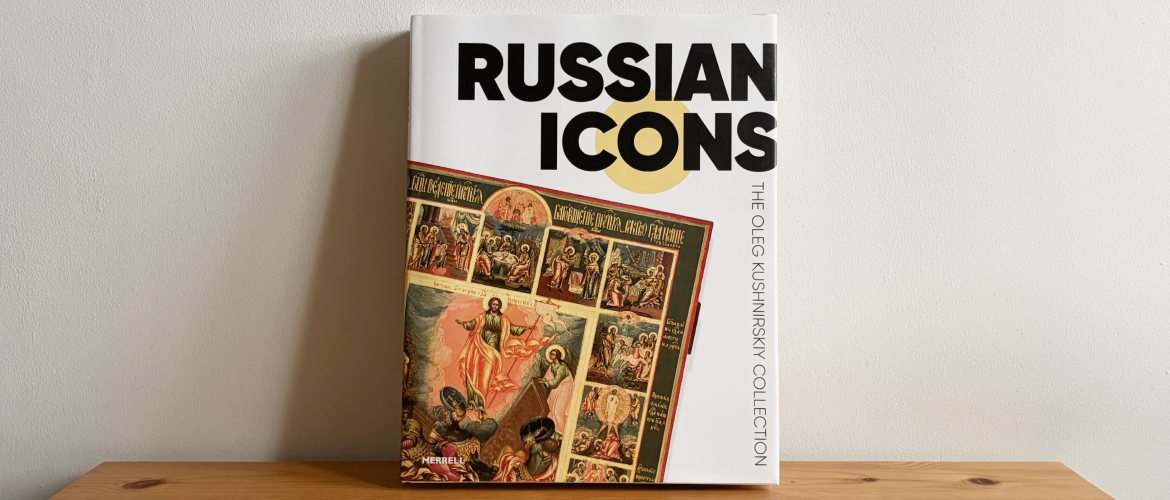
The recently published catalog “Russian Icons: The Oleg Kushnirskiy Collection” serves as an excellent starting point for serious scholarly inquiry into late Russian iconography. The presented collection is distinctive from both aesthetic and religious perspectives, as it focuses on the 17th to early 20th centuries of Russian icon painting—periods often underrepresented in institutional collections. High-resolution images of the icons are complemented by in-depth historiographic and iconographic analyses, along with expert commentary, offering valuable insight into the largely overlooked Imperial Russian period of icon history.
Late Russian Iconography as a Long-Neglected Area of Study
Experts note that the catalog’s most significant academic contribution lies in its explicit focus on a historically neglected period. Oleg Kushnirskiy’s collection opens a new chapter in the study of late Russian iconography by directing attention to works from the 18th to 20th centuries. Until recently, scholarly interest was largely confined to medieval Russian icons created before the 17th century, while later-period iconography was often undervalued and dismissed as artistically inferior or overly commercialized.
The decline in scholarly interest can be traced to the reign of Peter the Great, marking the beginning of a prolonged period of neglect that lasted until the fall of the Romanov dynasty. This indifference stemmed largely from the growing Westernization of Russian society, as cultural elites increasingly favored Western religious art while overlooking the distinctiveness and value of their own traditions. Peter the Great’s reforms are often seen as signaling the end of the centuries-old icon painting tradition that flourished in the 15th and 16th centuries in centers such as Moscow, Novgorod, Pskov, and Suzdal. This earlier period continues to be regarded as the Golden Age of Russian icon painting, with works produced thereafter frequently dismissed as inauthentic or diminished in artistic quality.
This arbitrariness in the evaluation of icons was also evident in early modern collecting practices. Pavel Tretiakov, a renowned art collector, acquired 62 icons from the 16th and 17th centuries over the course of his lifetime, laying the foundation for what would become one of the world’s largest collections of medieval religious art. Yet, even his collection soon came to be regarded as outdated and aesthetically devalued, highlighting the unstable and shifting status of Russian icons in the eyes of both scholars and collectors.
“Russian Icons: The Oleg Kushnirskiy Collection” as a Unique Resource for Scholarly Research
Oleg Kushnirskiy’s collection stands out for its distinctive focus on Old Believer icons spanning some of the most neglected centuries in the history of Russian icon painting. Old Believers represent a significant cultural and religious community that diverged from mainstream tastes, preserving centuries-old traditions and artistic techniques. As a result, the collection offers valuable insight into a period that is only now beginning to attract renewed scholarly attention, yet still lacks a substantial academic foundation for in-depth study.
“Russian Icons: The Oleg Kushnirskiy Collection” is available for purchase on the official website of Russian Icon Collection.