
Symbolism Many Have Missed in Works by Sandro Botticelli
What comes to an art lover’s mind when they think about Sandro Botticelli? This world-famous Renaissance painter has left a trace in global art legacy with images of ethereal beauty and dreamlike characters. His paintings have flowing lines and hide numerous philosophical ideas and cultural references that may escape the viewer’s gaze at first. Here is a brief guide to Botticelli’s symbolism that many might have missed.
Symbolism in Works by Sandro Botticelli
Symbolism of “Primavera”
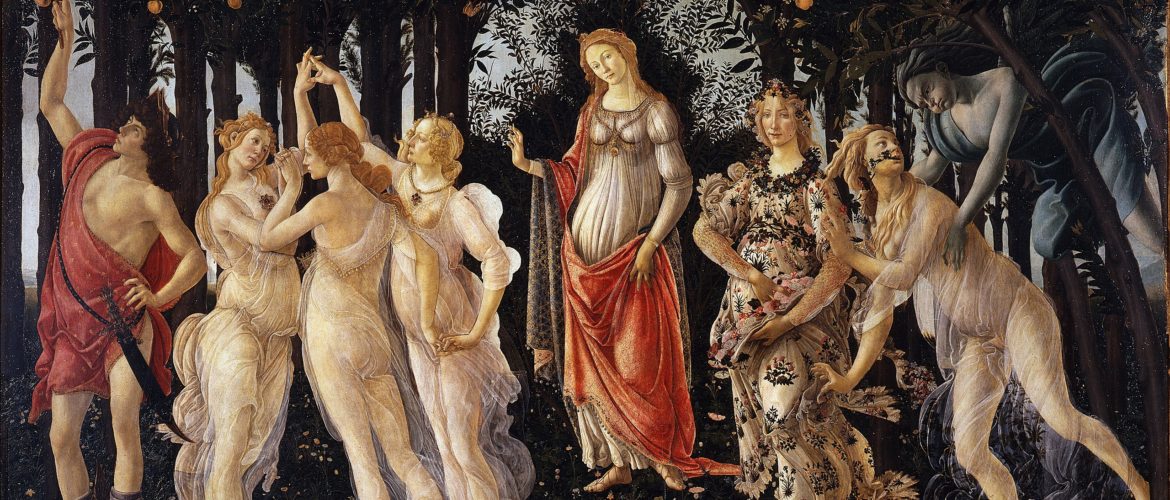
Primavera (featured image) is one of the most popular Botticelli paintings, showcasing an idyllic garden filled with classical Renaissance figures. However, closer analysis unveils a sophisticated allegory of love and transformation in this canvas, masterfully created at the backdrop of early spring. The character of Chloris, a nymph whom Zephyrus pursues, is often misinterpreted as a victim of abduction. However, experts point to the fact that Botticelli drew inspiration from Ovid’s tale Fasti when painting this canvas. This means that for Chloris, the encounter with Zephyrus foreshadows her wonderful transformation into the goddess of spring, Flora. The abundance of flowers in Flora’s gown, with a remarkable versatility of species exceeding 130 in number, is also a symbolic element that stands for rebirth and natural fruitfulness.
Symbolism of “The Birth of Venus”
Careful viewers will notice profound symbolism in Botticelli’s The Birth of Venus as well. Each visual element carries a deep symbolic meaning, starting from the scallop shell on which Venice stands, which symbolizes divine birth and purity. The posture in which Botticelli put Venice is reminiscent of the ancient sculptures of Aphrodite, showcasing the artist’s fascination with classical beauty in art.
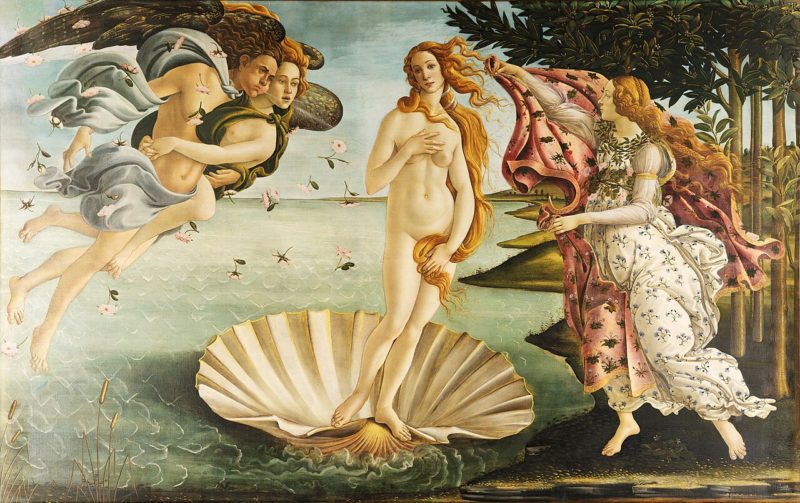
Even the roses that Zephyrus and Aura blow across the sky over Venice are not as random as they seem at first; these roses are without thorns. This image was a widespread symbol of ideal love and an uncorrupted state in the Renaissance period, commonly associated with Venice before the Fall. Besides, given Botticelli’s interest in Neoplatonism, many think that the artist embodied his ideas about ideal love that elevates the spirit and opens secret gateways to deeper knowledge into Venice’s perfectly beautiful character.
As you can see, many mythological and symbolic meanings included by Sandro Botticelli in his works are easy to miss when focusing on the aesthetic beauty of his imagery. However, the exploration of the symbolic layer of Botticelli’s art is a highly rewarding journey that opens new insights and gives an expert-level understanding of the intentional use of details and the richness of philosophical narratives.