
The Fine Art of Body Canvas: Elevating Personal Expression

Tattoos place visual art in direct conversation with the body, allowing an image to change as its wearer moves and ages. Once treated mainly as markers of group identity or rebellion, they now draw openly from portraiture, abstraction, typography, and traditional decorative arts. That creative range has encouraged a broader appreciation of body art as contemporary culture. The evolution of tattooing from a subculture to a celebrated art form has also prompted a deeper appreciation for the skill and vision of the tattoo artist.
The result is a highly personal art form. Unlike a framed work, a tattoo becomes part of daily life, so its composition, placement, and meaning deserve close attention.
Beyond Skin Deep: Tattoos as High Art
Body art shares many of the qualities used to assess work in a gallery. Composition guides the eye, line creates rhythm, and color establishes mood. The artist must also understand anatomy, since an image balanced on paper can appear distorted on the body.
The body adds movement to the composition. A botanical design may seem to grow as an arm turns, while a geometric piece can follow the natural line of a calf. Even a small image changes with posture and viewing angle, making the body a living canvas.
Technical skill is only part of the equation; strong body art also communicates a clear idea through visual choices. A portrait might use smooth tonal transitions to create depth, while an illustrative design could depend on energetic outlines and deliberately flat areas of color.
This invites useful comparisons with painting and drawing. Readers interested in meticulous realism, for example, can explore the methods and visual impact of contemporary hyperrealist artists. Similar attention to texture, light, and proportion appears in highly detailed portrait tattoos, though the curved and responsive surface of skin creates a different technical challenge.
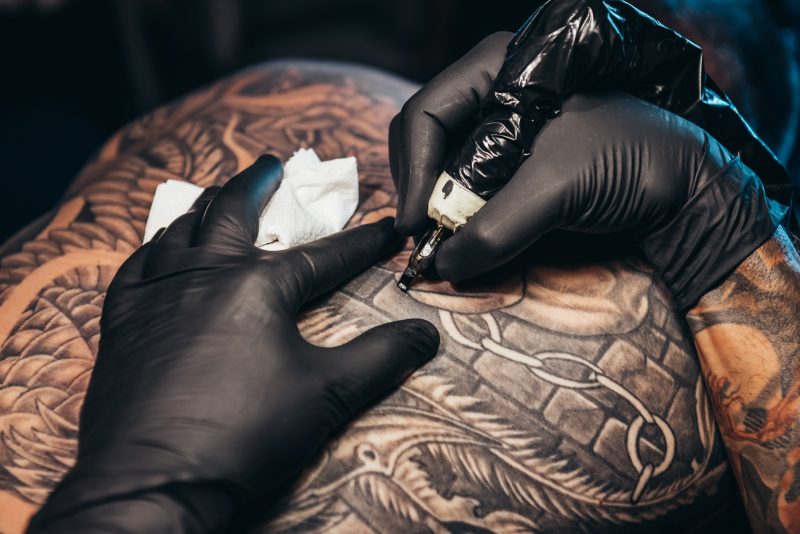
Curating Your Personal Collection
A growing tattoo collection benefits from curatorial thinking, with pieces contributing to a coherent visual identity through colour, subject matter, or spacing.
Start by photographing existing pieces in natural light and noting their style, size, and placement. Then consider how a new design will relate to existing pieces. A dense blackwork image beside a delicate line drawing may create intentional contrast, but the difference should feel considered.
When you’re ready to discuss an idea, choose a tattoo studio that offers consultations and custom design work suited to your aims. Bring two or three useful references instead of dozens of unrelated images. References should communicate specific preferences such as line weight, atmosphere, or color, not ask for another artist’s work to be copied.
Before confirming the design, review four practical points:
- Check how the composition looks when your body is relaxed and in motion.
- Ask how much detail will remain readable at the proposed size.
- Discuss how the colors may settle after healing.
- Consider leaving enough open space for possible future work.
Time is also a curatorial tool. You don’t need to fill every available area quickly. Allowing a collection to develop over several years gives you room to refine your taste and respond thoughtfully to earlier pieces.
The Artist’s Vision and Craft
A skilled tattoo artist interprets an idea through a recognizable visual language. One artist may specialize in fine lines and restrained botanical forms, while another may create bold illustrative scenes or intricate ornamental patterns. Reviewing healed examples of their work offers more useful information than looking only at freshly completed pieces, as healed photographs reveal how lines and tonal areas settle over time.
During the consultation, explain the subject, mood, and personal context, then give the artist space to develop the composition. If you want a memorial design based on a flower from a relative’s garden, for example, share photographs of the actual plant and explain which features matter most. The artist can then propose a composition that works with the chosen area of the body.
Pay close attention to scale. Fine details need enough room to remain distinct, particularly when a design contains faces, lettering, or layered textures. An artist may recommend enlarging the image or simplifying one section. That guidance protects the clarity of the work.
Preparation and aftercare also affect the final result. Follow the studio’s instructions and wear clothing that provides easy access to the placement area. During healing, keep the site clean, avoid picking at flaking skin, and protect it from prolonged sun exposure. Public discussion of the form often focuses on tattoo self-expression, but craft, care, and collaboration determine how effectively that expression takes visual form.
Symbolism in Contemporary Body Art
Symbols gain meaning through personal context, as well as cultural history. A bird can suggest freedom, migration, memory, or a connection to a specific place. A circle might represent continuity to one person and balance to another. The image alone rarely tells the whole story.
Contemporary body art often combines inherited motifs with individual experiences. Someone might pair a traditional floral form with the coordinates of a childhood home, or incorporate handwriting from an old letter into an abstract composition. These combinations turn familiar imagery into something personal.
Research matters when using imagery from a culture, faith, or community beyond your own. Learn where the motif comes from, how it is traditionally used, and whether it carries a status or role that hasn’t been earned. An attractive pattern may hold ceremonial or community meaning that makes casual use inappropriate. Asking informed questions can prevent a permanent design from misrepresenting its source.
The social meaning of tattoos changes across generations and settings. Academic projects examining the effort involved in humanizing tattoo culture show why looking beyond appearance is valuable. A visible design may record grief, family history, recovery, celebration, or aesthetic preference, and assumptions based on placement or style often miss that complexity.
If meaning matters to your design, write a short private description before the consultation. Include what the image represents now and what you hope it can still represent in ten years. This helps separate a lasting idea from a passing impulse.
A successful piece leaves room for personal meaning to evolve. The original meaning may remain intact, while later experiences add new associations. That ability to gather history makes body art distinctive: the artwork stays physically close while its interpretation continues to change.
Select the image carefully, then let the artist consider how it should live on the body. The most convincing design will feel resolved on the day it is completed while retaining enough visual and emotional depth to accompany the years ahead.