
A Unique Mix of Genius and Scandal in the Art of Egon Schiele

Egon Schiele was one of the most extravagant and memorable artists of the early 20th century. His legacy is a unique oeuvre mixing eroticism, fragility, and psychological unease, offering a creative interpretation of bourgeois respectability. While many critics associate the effect of Egon Schiele’s art with social outrage, others point to the artist’s unique ability to expose the cultural anxieties and fears of his contemporaries.
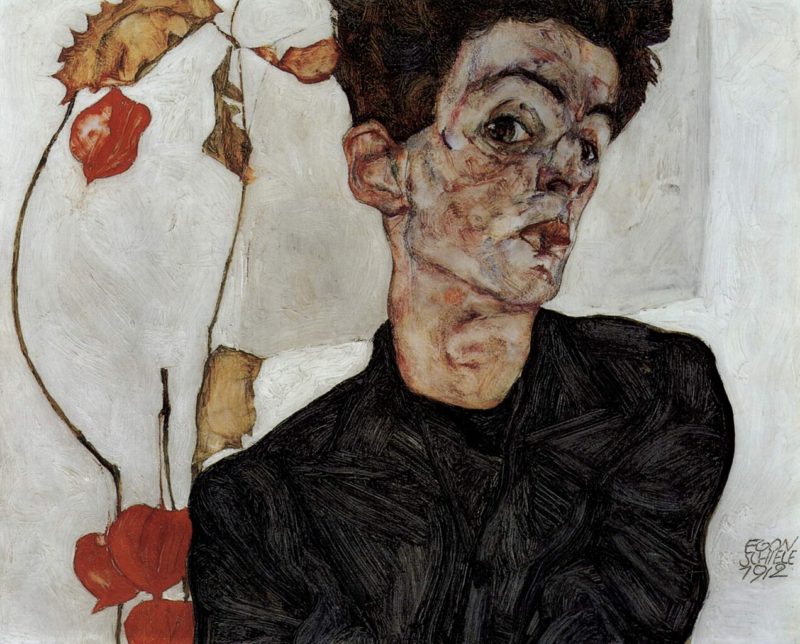
Art in Early 20th-Century Vienna
Vienna at the turn of the century was a paradoxical hub of intellectual brilliance and moral rigidity. On the one hand, the spirit of artistic innovation was in the air, with the representatives of the Vienna Secession, such as Gustav Klimt and Otto Wagner, expanding the boundaries of the tradition. On the other hand, the cream of Vienna’s society remained highly conservative, with strict codes of propriety in social and private spheres.
Egon Schiele’s art arose from this contradiction by exposing the deep divide between the convention and the social desire for change. Being a strong admirer of Gustav Klimt’s art, Schiele brought Klimt’s ideas far forward by prioritizing raw psychological exposure in his visual language. The figures in Schiele’s works are nude, elongated, and confrontational, highlighting the artist’s explicit refusal to idealize the human body. On the contrary, Egon Schiele exaggerated human decay, vulnerability, and the deeply humane desire as parts of his visual imagery.
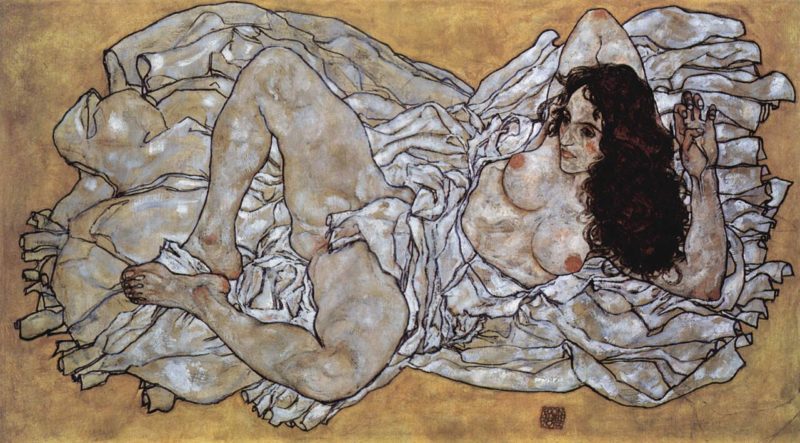
Social Reaction to Art by Egon Schiele
Egon Schiele’s openly provocative visual techniques won him notoriety in the local society, with his work being blamed for obscenity and banned from public display. In 1912, the artist was even arrested for indecency and display of erotic drawings. Though the charges were quickly dropped, this incident exposed the society’s moral unreadiness for the bold, provocative art of Schiele.
Discipline and Intent in Egon Schiele’s Art
Though Schiele won a scandalous reputation in early 20th-century Vienna, his art can’t be viewed solely from the viewpoint of moral challenge. Experts note that his work is deeply structured by discipline and intent, with abrupt angles and compressed spaces serving as the artist’s strictly controlled expressive devices. Schiele invented these visual techniques to visualize the psychological tension and unease of a traditional society trying to embrace modernity, sexuality, and the remaking of traditional authority concepts. Today, the artist is regarded as a product of his time and a forward-looking critic of his society, who managed to convert the psychological spirit of the era into recognizable artistic forms.