
Apples and Mountains: Recurring Themes in the Work of Paul Cezanne
Many artists resort to visual repetition in their art for various purposes. Some use it to critique industrial processes; others integrate repetition with their creative conceptual strategies. One of the pioneers of serial motifs in art was Paul Cezanne, a person whose obsessive reinvestigation of the same objects and landscapes went down in the history of art.
Paul Cezanne’s Artistic Method and Approach
Paul Cezanne made his first steps in art during the period of Impressionism, which prioritized the depiction of the painter’s first, spontaneous impression. The majority of artists at the time relied on the chiaroscuro technique or traditional modeling to build a color composition. Yet, Cezanne chose a different path of structural analysis and long-term observation. His work on every canvas was lengthy and slow, with small, deliberate brushstrokes used for color modulation. Paul Cezanne’s unique contribution was in the use of color for volume and space construction, with visual depth achieved via subtle shifts in the color hues. Notably, the artist denied the conventions of academic linear perspective, opting for intersecting and tilting planes instead.
Still Lifes with Recurring Visuals
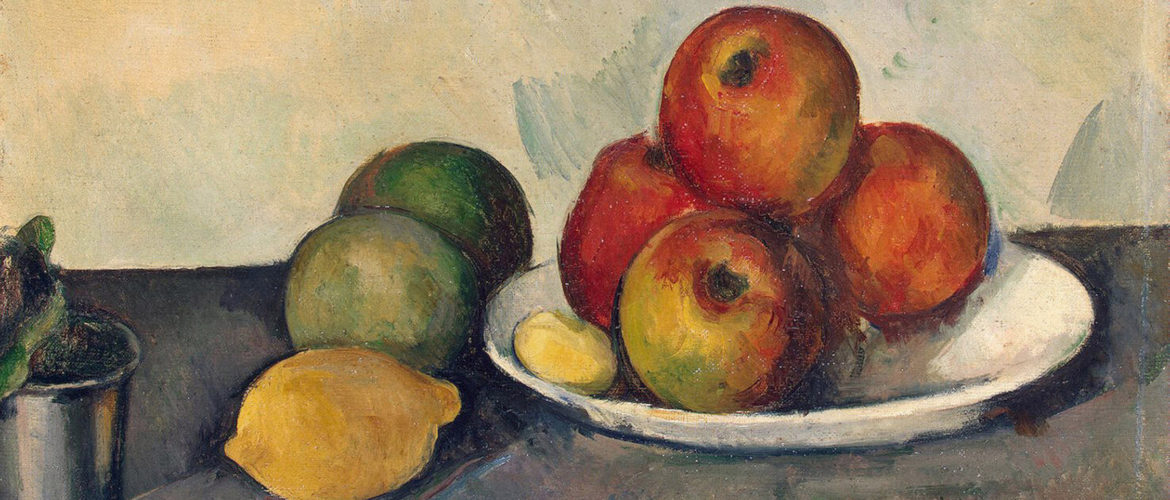
The most illustrative example of Paul Cezanne’s recurring visual motifs is his portfolio of still lifes. The artist widely used apples in his art by positioning them in different combinations and using plates, tables, and draped cloths as their backgrounds. His interest in apples didn’t hold any symbolic meaning but was rather of a structural nature. The artist employed them to explore volume, color, and spatial tension, thus making his still lifes an almost academic guide to rendering three-dimensional objects on flat surfaces.
Landscapes by Paul Cezanne
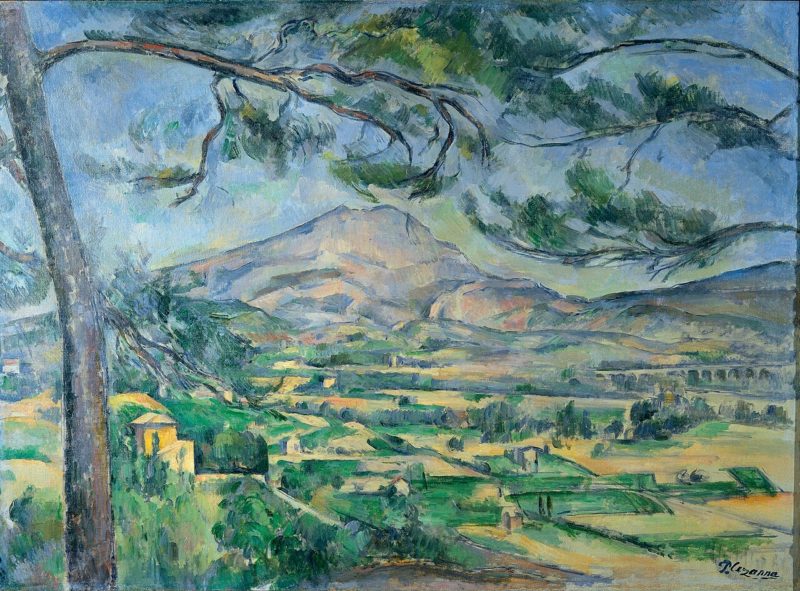
Another aspect of Paul Cezanne’s creative revisiting was landscape painting. One of his top interests was Mont Saint-Victoire, which he depicted in many of his canvases. Overall, there are dozens of Cezanne’s landscapes featuring this mountain, each offering a slightly different view of a constant subject. For the artist, landscape painting represented a continuous renegotiation of the relationship between the subject and the observer, with every inquiry giving new, unexpected results.
Cezanne’s Art as an Intricate Balance Between Stability and Instability
Paul Cezanne’s unique approach gave birth to new representational modes within post-Impressionism, arising from his resistance to convention and closure. The artist’s interest in the underlying structure of objects and their composition gave a strong impetus to the revival of classical art methods and the depiction of unadorned reality. His works laid the foundation for the rise of Cubism and affected many approaches of avant-garde painters.