
Fear in Goya’s Paintings: Witches, Devil, and Ritual Terror

Many fans of Francisco Goya’s art know that he turned to the themes of diabolism, witchcraft, and ritual terror many times throughout his career. Starting from the early commissioned paintings through the satirical Los Caprichos (1799) and the horrific Pinturas negras painted on the walls of the artist’s home, Goya’s paintings are marked with a dark, unsettling inquiry into the depths of human character.
Goya’s Witches as a Critique of the Spanish Inquisition
To understand the symbolism and in-depth meaning of Goya’s paintings, one should capture the context in which the artist lived and worked. The Spanish Inquisition, set up in 1478 and abolished only in 1834, had become a sophisticated and pervasive instrument of social control by the time Goya was born in 1746. The public spectacle of autos-da-fe included theatrical readings of charges, processions of the condemned, and cruel executions, instrumentalizing fear by turning it into civic theater.
Witch trials stood apart in this spectacle of cruelty; charges were unprovable and impossible to disprove, with most confessions obtained through torture. The accused women were largely poor, widows, and socially marginal, often working with herbs as healers or midwives. Their prosecution targeted both social deviance and a demonstration of the Church’s supremacy over all human matters. That’s why Francisco Goya depicted witches as exhausted, ordinary people to show the ridiculousness and horror of attacks on them.
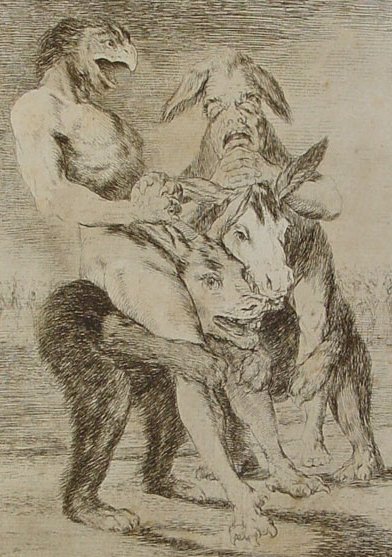
The Caprichos: Satirical Etchings with a Deep Meaning
The world saw Los Caprichos in 1799; it represented a series of 80 satirical etchings that ridiculed the clergy, the nobility, and civic superstition. The etchings were on open sale for 27 days until the moment Goya, understanding the far-reaching implications of such a sharp critique, withdrew them all from sale and donated the collection to the King. The move was outstandingly wise; by donating his art to the royal family, Goya automatically protected it from destruction by the Inquisition.
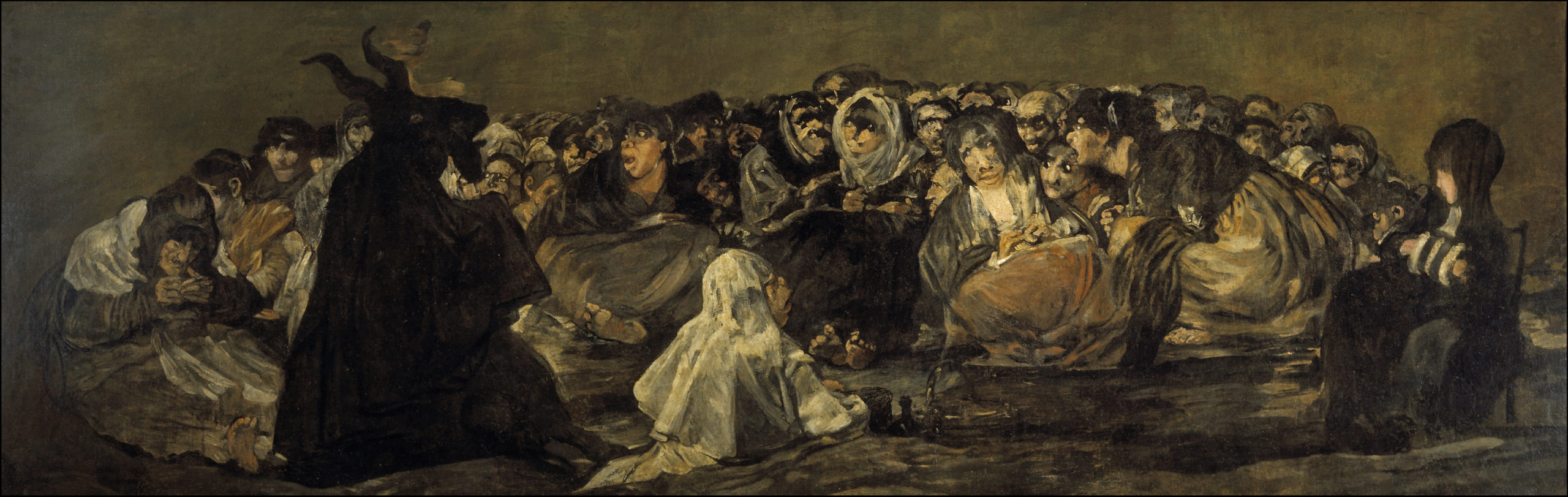
Goya’s Paintings as an Unsettling Social Mirror
The Black Paintings (Pinturas negras), created by Francisco Goya on the walls of his home at the dusk of his life, serve as the most pronounced example of the artist’s social critique and despair. A notable painting amid this series is The Great He-Goat, symbolizing the stupidity and power of the psychology of the crowd, which the powerful use to control and intimidate people. Created in the period of Spain settling into darkness under the cruel, absolutist rule of Fernando VII, this work gives a full view of the unsettling, oppressive context in which Goya lived and worked.